🧹
Microfiber scrubber
Soaks the pane in soapy water and lifts the dirt off it without scratching the glass.

Glass soap, clean water, a proper squeegee, and every edge finished by hand. We scrub the pane, pull the water off in overlapping strokes, then dry the frame and corners with a fresh microfiber. That last step is the one most people skip.
Straight talk about reach: an extension pole gets us the ground floor from the ground. Above that we use a ladder or step stool — set up on level ground, one of us footing it, a parent around. We are not high-rise cleaners, and anything we can't do safely we turn down and tell you to call a full-time crew.
Feet on the ground, brush up on the glass — the pole does the reaching wherever it can.
Streaks almost never come from the glass. They come from the person cleaning it, and there are really only three causes.
Dirty water. Once the bucket goes grey you are painting dirt back on. We change the water the moment it looks murky — usually more than once on a whole house.
Worn squeegee rubber. One nick in the blade draws a thin line down every pane. Fresh rubber is the single biggest difference between a good job and a bad one.
Wet edges. Water hiding in the frame runs back onto clean glass ten minutes after you leave. That's why we dry every edge and corner by hand before we call it done.
Clean water and a few drops of glass soap. The moment the bucket looks grey it gets emptied and refilled — it costs us nothing but a minute.
We check the squeegee blade for nicks before we start and swap it out well before it wears. A blunt blade is the number one cause of lines down a window.
A clean microfiber round every frame and corner, so nothing runs back down the pane after we have packed up.
Tap or hover each one. Nothing exotic — just the right tool, looked after properly.
Soaks the pane in soapy water and lifts the dirt off it without scratching the glass.
Fresh rubber, checked for nicks before every job. This is what actually makes glass clear.
Screws onto the scrubber or the squeegee so we can reach high panes with both feet on the ground instead of going up a ladder.
Clean ones every job, for drying the frame, the corners and the sill so nothing runs back.
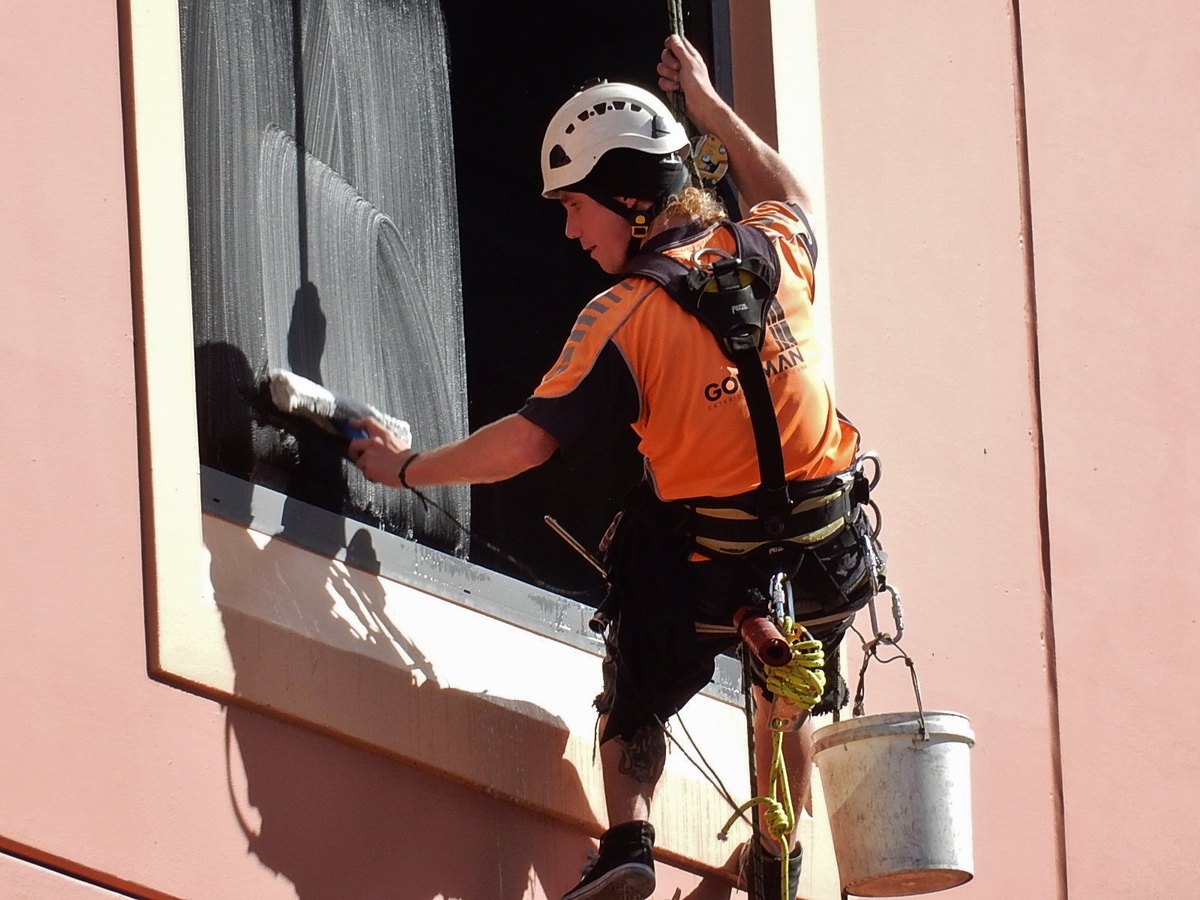 Step two in real life: soap on, scrubber working the dirt loose.
Loose grit and cobwebs come off the frame before we touch the glass, so nothing gritty ends up under the brush.
Water on, brush working across the pane, then along every edge where dirt hides.
We pull the brush off the glass and sheet clean water down the pane from the top. Everything the brush loosened rides down and off.
Seriously — that's the step. It dries on its own in a few minutes with no spots and no towel marks.
Every single thing we bring is chosen for one reason: it cleans glass without hurting it.
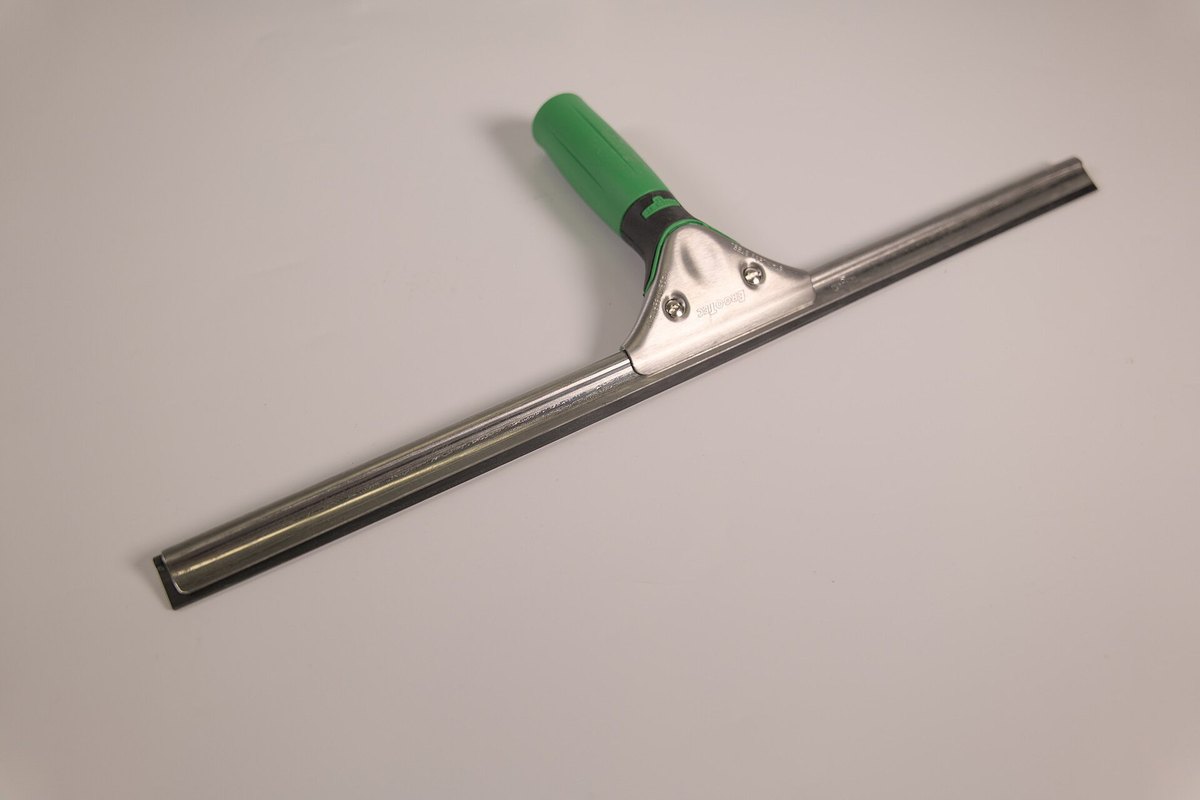
What it does: pulls the water off in one clean pass, taking the dirt with it. The whole job lives or dies on this tool.
Why ours is safe: the only thing touching your glass is soft rubber in a smooth channel. We change the rubber often — a nicked or dried-out blade is what leaves those thin lines people call streaks.
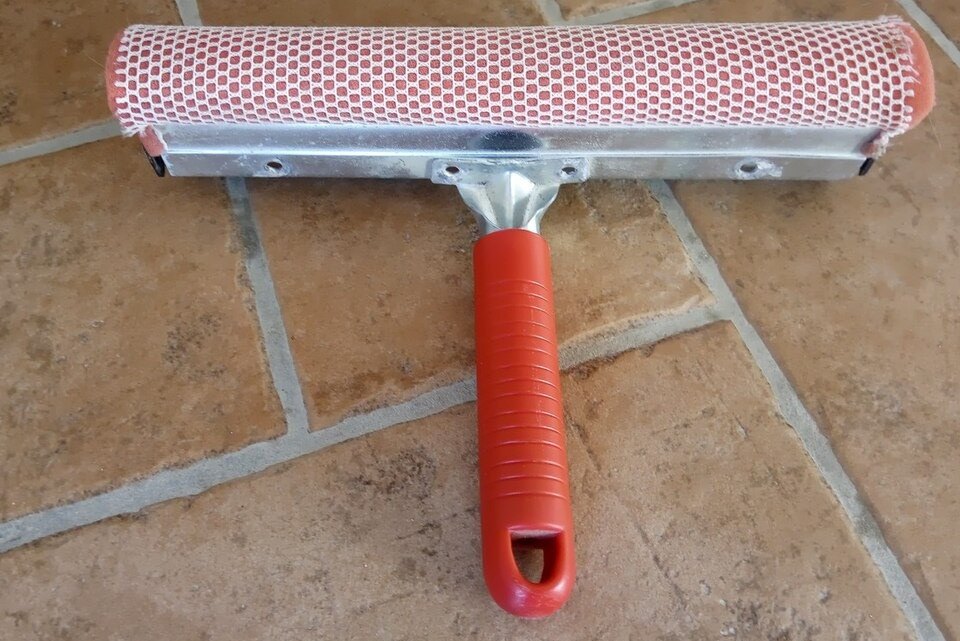
What it does: holds a ton of soapy water and loosens everything stuck on — pollen, dust, bug spots, sprinkler mist.
Why ours is safe: it's a soft microfiber sleeve, not a scouring pad. We rinse it constantly so grit doesn't build up in the fibers, because trapped grit is what scratches windows — never the fabric itself.
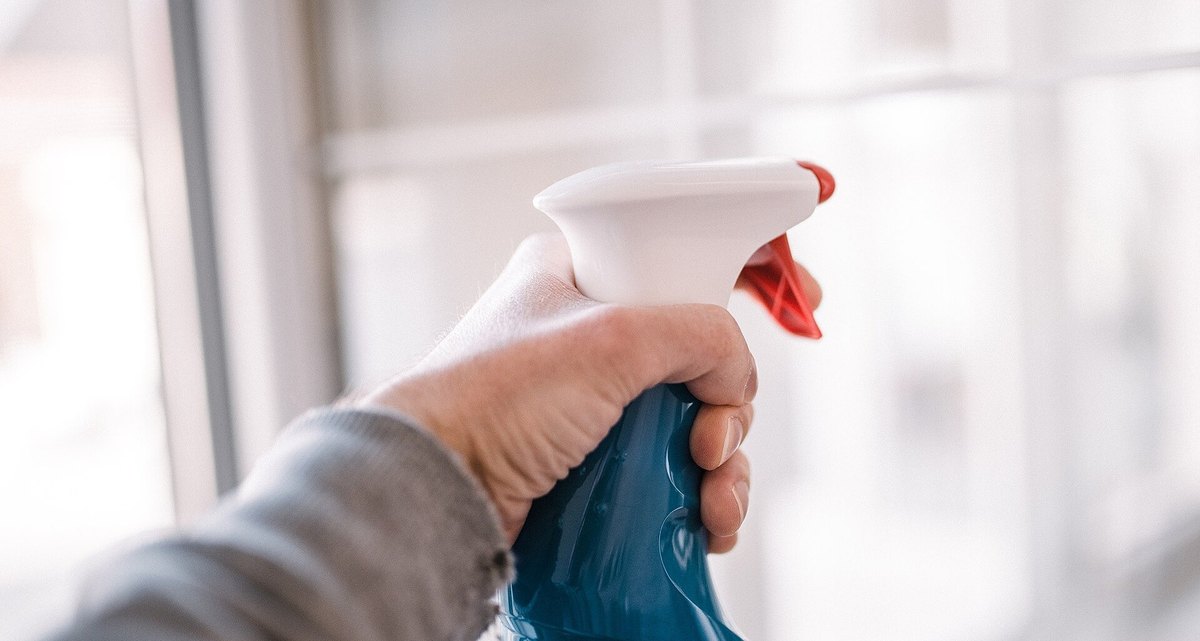
What it does: breaks the surface tension so dirt lets go, and it lubricates the glass so the squeegee glides instead of skipping.
Why ours is safe: a tiny amount of pro glass soap in a lot of water. No ammonia, no harsh chemicals, nothing that eats window tint, damages seals, or kills the plants under your windows.
What it does: puts the scrubber and the squeegee up on high panes while we stay standing on the ground.
Why we like it: every pane we can reach with the pole is a pane nobody has to climb a ladder for. Full page on it here →
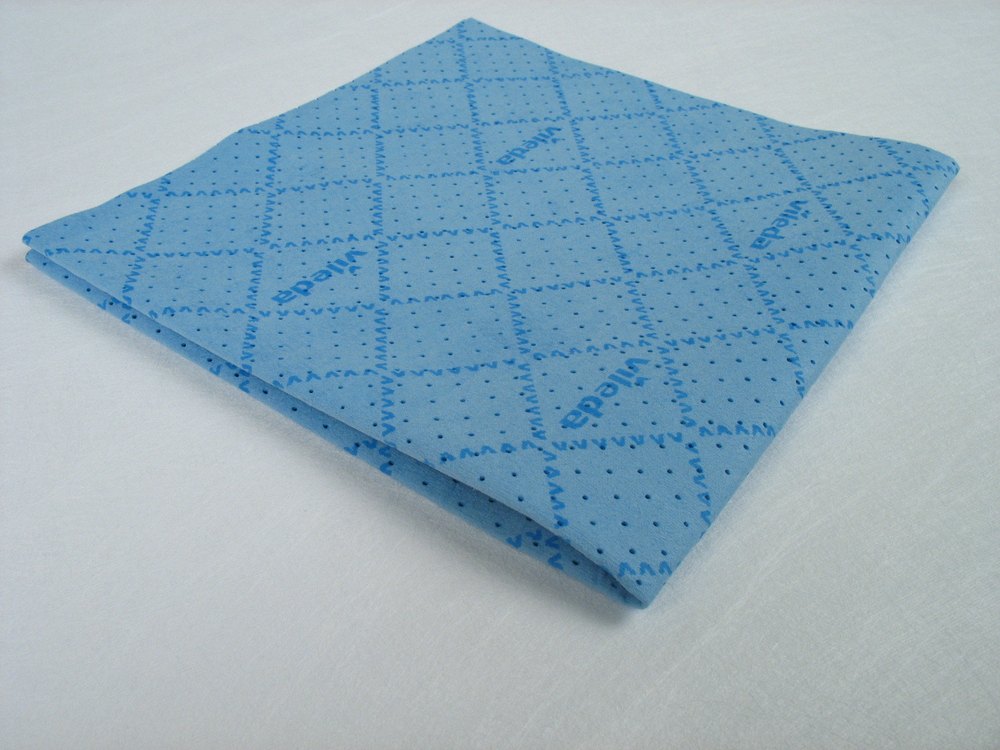
What it does: wipes the edges and corners where a squeegee can't reach, and catches the last drip along the bottom of the pane.
Why ours is safe: lint-free microfiber, washed after every job. A dirty towel just smears the dirt back on, so we bring a stack of clean ones.
What it does: takes off paint specks, stickers, and hard stuck-on gunk that soap won't touch.
Why ours is safe: this is the one tool that CAN scratch, so we treat it that way. Fresh blade, always on soaking wet glass, one direction, flat to the pane — and never on tempered or coated glass. If we're not sure a window can take it, we skip it and tell you.
What it does: keeps clean solution close and keeps our tools off your deck and your window sills.
Why ours is safe: fresh water every few windows. Cleaning window ten out of a bucket of mud helps nobody.
What it does: gets us to the windows the pole can't reach well — awkward angles, glass tucked under an overhang, and the tops of tall inside windows.
How we use it safely: the pole does as much of the high outside glass as it can first. When a ladder is the only way, it goes on level ground with standoff pads — never leaning on your gutters, your siding, or the glass itself. One of us always foots the ladder while the other works, and a parent is around for the higher outside windows. Inside, a step stool covers almost everything, because most second-story windows fold or tilt in.
What it does: protects your floor, your sill and your paint while we do insides.
Why it matters: a great window over a soaked windowsill is not a great job. We leave the room the way we found it.
Here's the honest truth most people don't know: glass doesn't get scratched by towels or brushes. It gets scratched by a piece of grit that got trapped under one of them — or by a scraper used dry or on the wrong kind of glass.
So our whole system is built around grit control:
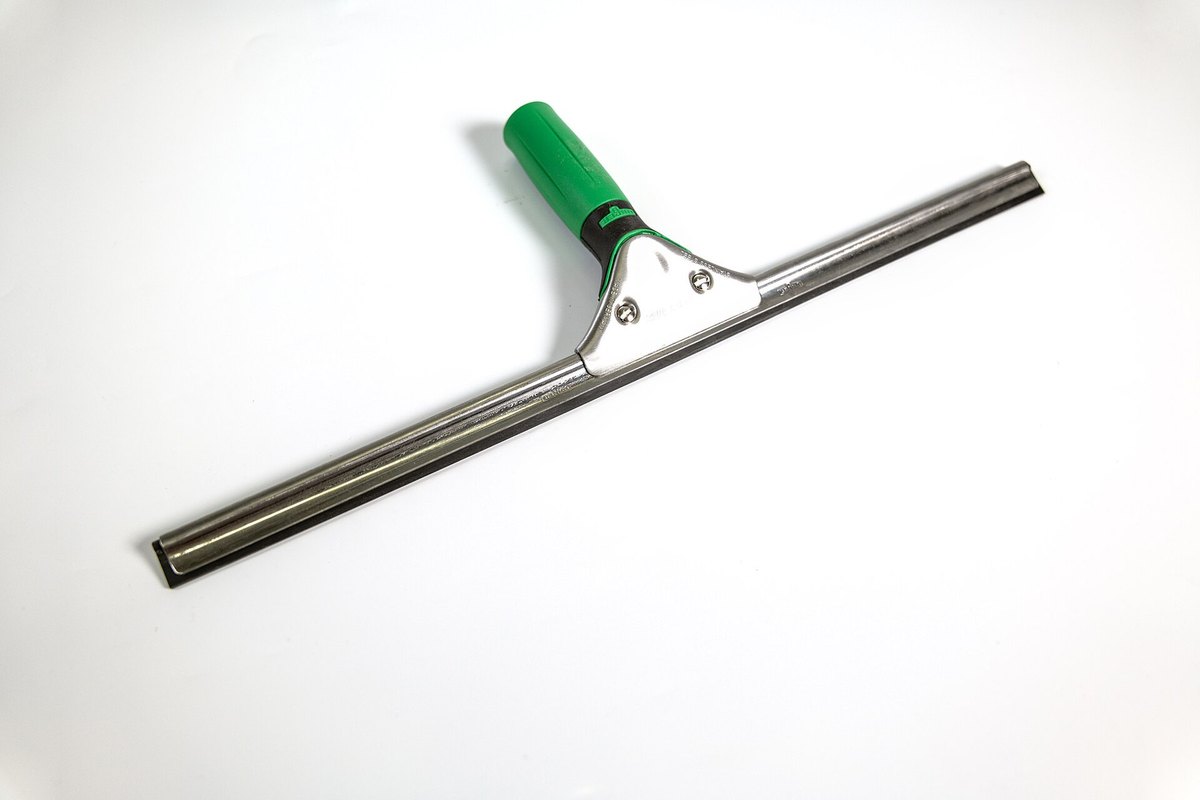 Fresh rubber. The single biggest reason a window ends up streak-free.
If we're ever unsure whether something might damage your window, we stop and ask you — even if it means leaving one spot on the glass.
Ladder falls are the #1 injury in window cleaning, so we use the pole for as much of the high glass as it can reach. When a ladder is the only way, it goes on level ground and one of us foots it the whole time.
It's filtered water. Nothing that hurts your plants, your pets, or the paint on your siding.
No dents in gutters, no scuffs on siding, no footprints in the mulch under your windows.